Introduction
Have you ever wondered how the hardest materials are created? Brown Fused Alumina (BFA) is a prime example of a highly durable substance, essential for various industrial uses. In this article, we will delve into the production process of BFA, which is made from aluminum oxide (Al₂O₃) and is crucial in abrasives, refractories, and sandblasting.
In this guide, we will explore the detailed stages of its production, from sourcing raw materials to the final inspection. You'll gain insights into each step's role in ensuring the product’s quality and performance. Qinxin Energy Group provides top-tier BFA products, leveraging advanced processes to ensure consistent quality and high performance in every batch.

1. Raw Material Selection and Preparation
1.1 Sourcing High-Quality Bauxite
The production of Brown Fused Alumina begins with the selection of high-quality bauxite, which contains a significant amount of aluminum oxide (Al₂O₃), the key component of BFA. To achieve the desired hardness and durability, the bauxite used must contain at least 85% aluminum oxide. High-grade bauxite ensures that the fusion process results in a tougher and more reliable final product.
Additionally, the selection of bauxite is essential because impurities, such as silica (SiO₂) and iron oxide (Fe₂O₃), can affect the material's performance. These impurities must be minimized to produce high-quality BFA. Qinxin Energy Group carefully selects high-purity bauxite to ensure the resulting BFA delivers optimal hardness and wear resistance, essential for demanding industrial applications.
Tip: Sourcing bauxite with a high Al₂O₃ content ensures that the final product has optimal hardness and abrasive qualities. Lower-grade bauxite can result in a weaker BFA product with reduced performance.
1.2 Mixing and Preparing Raw Materials
Once high-quality bauxite is sourced, it is mixed with carbon materials like anthracite or coke. These carbon sources serve as reducing agents in the fusion process. Additionally, iron filings are added to assist in the formation of slag, which helps remove impurities during the high-temperature smelting process.
The raw materials are mixed in precise proportions to ensure uniformity in the smelting process. Consistent mixing is essential for achieving a high-quality product with predictable performance across various applications.
2. Fusion Process: Electric Arc Furnace Smelting
2.1 High-Temperature Smelting
The raw material mixture is then introduced into an electric arc furnace, where temperatures exceed 2000°C (3,632°F). At these extreme temperatures, the bauxite and carbon react, and the alumina in the bauxite is reduced. This process results in a molten mass of Brown Fused Alumina (BFA).
The electric arc furnace provides the high heat needed to facilitate the chemical reactions, ensuring that the alumina is fully fused. The temperature control in the furnace is critical, as too much or too little heat can affect the purity and performance of the final product.
Tip: Maintaining consistent high temperatures during smelting ensures optimal fusion and the desired hardness of the final product. Variations in furnace temperature can lead to inconsistent material properties. Qinxin Energy Group employs advanced furnace control systems to maintain temperature precision, which helps guarantee consistent BFA quality.
2.2 Chemical Reactions and Reduction
During the smelting process, the carbon in the mixture reacts with the aluminum oxide to form aluminum and other components. As the molten material cools, the aluminum oxide crystallizes into a tough and dense structure. The high temperatures and chemical reactions involved in this step are crucial for creating the abrasive properties of BFA.
The reduction of impurities is also an important aspect of this stage. By carefully controlling the reduction process, the final product will have reduced levels of unwanted elements like silicon, iron, and titanium. These impurities can lower the performance of the material, so their removal is essential for creating high-quality Brown Fused Alumina.
3. Cooling and Solidification
3.1 Slow Cooling for Crystal Growth
Once the molten material is formed, it is allowed to cool slowly over 24 to 48 hours. This slow cooling process is essential for the growth of blocky aluminum oxide (Al₂O₃) crystals, which give the final product its hardness and durability.
The slow cooling process encourages the formation of large, dense crystals, which contribute to the toughness and abrasion resistance of Brown Fused Alumina. By carefully controlling the cooling rate, manufacturers ensure that the final product has the optimal crystalline structure for industrial applications.
3.2 Solidification into Brown Fused Alumina
After cooling, the molten material solidifies into large blocks of Brown Fused Alumina. These blocks, also known as BFA lumps, are tough and dense, making them ideal for further processing into abrasives, refractories, and other industrial products.
The solidification process is crucial for creating the tough, blocky structure that makes BFA suitable for grinding and polishing. The solidified blocks are then ready for crushing and further processing to meet specific industrial requirements.
4. Crushing and Grinding
4.1 Multi-Stage Crushing Process
Once the Brown Fused Alumina blocks have cooled and solidified, they are subjected to a multi-stage crushing process. This involves using jaw crushers, hammer crushers, and ball mills to reduce the size of the solidified blocks.
The goal of the crushing process is to break down the large BFA lumps into smaller, more manageable particles. The crushing is done in multiple stages to ensure the material is broken down efficiently while preserving its abrasive qualities.
4.2 Particle Size Reduction for Specific Uses
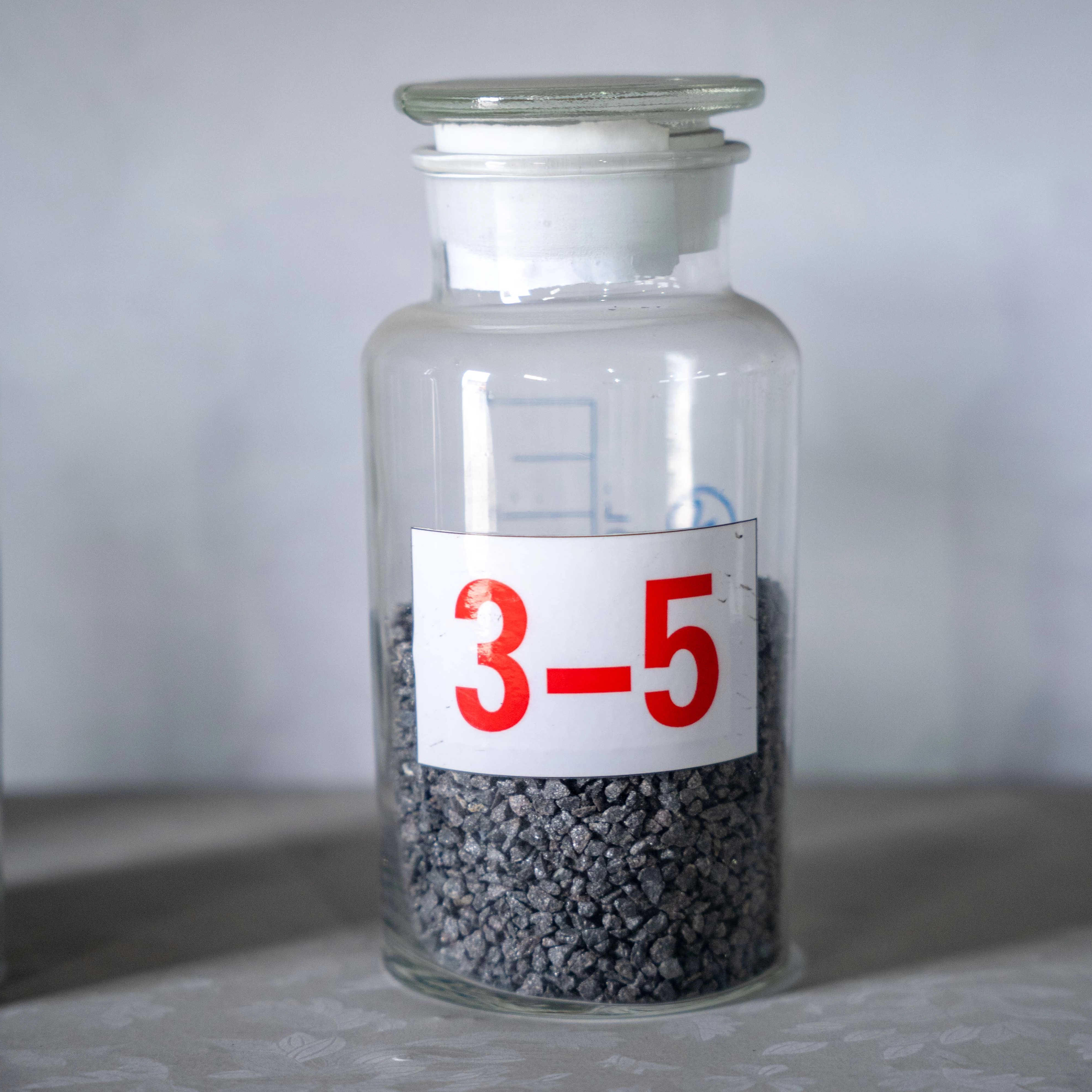
The crushed Brown Fused Alumina is then sized according to its intended application. Different industries require different particle sizes for specific tasks, such as grinding, polishing, or sandblasting.
For instance, coarse grits (F12-F80) are used for grinding wheels, while fine grits (F90-F220) are used in sandblasting and polishing applications. The particle size distribution is crucial for ensuring that the material performs consistently in industrial processes.
Tip: The particle size of Brown Fused Alumina must be carefully controlled to ensure it meets the specific requirements of each application. Variations in particle size can affect the efficiency and performance of the material in industrial settings.
5. Purification: Magnetic Separation
5.1 Removing Iron and Metal Impurities
After crushing, the Brown Fused Alumina undergoes a magnetic separation process to remove any residual iron and metal impurities. Iron impurities can negatively impact the performance of BFA, especially in applications that require high levels of purity, such as precision grinding and sandblasting.
High-intensity magnetic separators are used to effectively remove iron from the material, ensuring that only the purest BFA reaches the final stages of production.
5.2 Impact of Purification on Performance
Purification through magnetic separation plays a vital role in enhancing the performance of Brown Fused Alumina. By reducing iron and metal impurities, the material becomes more suitable for high-performance abrasive applications. It also ensures that BFA has the durability and strength needed to withstand demanding industrial environments.
6. Screening and Grading
6.1 Grading for Specific Applications
Once the Brown Fused Alumina is purified, it is screened into different grit sizes based on its intended use. Screening ensures that the material meets the specific particle size requirements for various applications, such as abrasives, refractories, and sandblasting.
Grading BFA ensures that each batch of material is suitable for its intended purpose, whether for precision grinding or general abrasion. The consistent particle size distribution helps to achieve uniform results in industrial processes.
6.2 Ensuring Quality Control Through Screening
Accurate grading and screening are essential for ensuring that the final product meets industry standards. Brown Fused Alumina is typically graded according to international standards such as FEPA, ANSI, or JIS. These standards ensure that the material performs effectively and predictably in its intended applications.
7. Washing, Drying, and Final Inspection
7.1 Cleaning the Product
After screening, the Brown Fused Alumina is washed to remove any remaining dust, impurities, or contaminants. Washing helps improve the purity of the material and ensures that it meets the high standards required for industrial applications.
The washing process also ensures that the final product does not contain any surface contaminants that could affect its performance in abrasive or refractory applications.
7.2 Quality Assurance and Final Testing
Before shipping, the Brown Fused Alumina undergoes rigorous quality testing. The material is tested for its Al₂O₃ content, purity, and particle size distribution to ensure that it meets industry specifications.
Once the material passes all quality checks, it is packed and prepared for shipment. Packaging is carefully done to ensure that the material remains stable and protected during transport.
Key Quality Standards for Brown Fused Alumina
| Property | Typical Value | Quality Standard |
| Al₂O₃ Content | ≥95% | FEPA, ANSI, JIS |
| Fe₂O₃ Content | ≤0.3% | ISO, FEPA |
| TiO₂ Content | ≤3.5% | ANSI, JIS |
| SiO₂ Content | ≤1.5% | ISO, JIS |
| Mohs Hardness | 9 | FEPA, ANSI |
| Bulk Density | 3.9-4.1 g/cm³ | JIS, ANSI |
Impact of Purification and Grading on Performance
| Step | Impact on Performance |
| Magnetic Separation | Removes iron and metal impurities, enhancing purity and toughness. |
| Screening and Grading | Ensures consistent particle size and uniform abrasive performance. |
| Washing and Final Inspection | Removes dust and contaminants, improving product quality. |
Conclusion
The production of Brown Fused Alumina (BFA) involves several critical stages, each ensuring the final product's quality and performance. From raw material selection to final inspection, every step must be carefully controlled to meet the demanding needs of abrasives, refractories, and sandblasting industries. Qinxin Energy Group’s high-quality BFA offers exceptional durability, reliability, and versatility. Their products are essential for applications such as grinding wheels, polishing, and surface preparation, providing unmatched value for industrial use.
FAQ
Q: What is Brown Fused Alumina?
A: Brown Fused Alumina (BFA) is a tough, durable material made by fusing bauxite with carbon at high temperatures. It is primarily used in abrasives, refractories, and sandblasting.
Q: How is Brown Fused Alumina Oxide produced?
A: Brown Fused Alumina Oxide is produced by melting high-grade bauxite in an electric arc furnace, followed by slow cooling and crushing to form abrasive grits.
Q: What are the applications of Brown Fused Alumina?
A: Brown Fused Alumina is used in grinding wheels, sandblasting, polishing, and refractory products due to its hardness and wear resistance.
Q: Why is Brown Fused Alumina preferred in abrasives?
A: Brown Fused Alumina’s high hardness, durability, and sharp edges make it ideal for precise grinding and surface preparation applications.
Q: How does the production process impact Brown Fused Alumina's quality?
A: The production process, from raw material selection to cooling, directly affects BFA’s hardness, durability, and consistency, ensuring high-quality performance.